


Last reviewed and updated: September 21, 2026 by David Mount.
Quick answer
If you’re a Northern Virginia homeowner selling to retire and relocate out of state, plan to start the process 6 to 12 months before your move date. Get a current valuation of your home in today’s 2026 market, understand the Section 121 capital-gains exclusion ($250,000 single, $500,000 married filing jointly), and choose an agent set up for the remote document signing and timing coordination this kind of move requires. David Mount brings 12+ years and 200+ Northern Virginia transactions across Arlington, Alexandria, Fairfax County, Loudoun County, and Prince William County, plus a strong network of trusted REALTOR® connections in Florida, the Carolinas, Tennessee, and Arizona. Call (571) 946-8418 or email david.mount@thereduxgroup.com.
Selling Your Northern Virginia Home to Retire: A 2026 Guide for Retirees Relocating Out of State
Recent retiring-seller transactions I’ve personally closed: South Run Forest (Springfield), 2015; Cardinal Forest (Springfield), 2022; Lakewood Hills (Springfield), 2026; Dale City (Woodbridge), 2022; the City of Alexandria, 2025; and Sully Station (Centreville), 2026.
After years of hard work and service, whether in government, the military, contracting, or the private sector, retirement is an exciting new chapter. Many Northern Virginia retirees are ready to trade the fast pace of the DC metro area for a warmer climate or a lower cost of living in Florida, the Carolinas, Tennessee, or Arizona. Before making that move, you need a clear, reliable plan to sell your Northern Virginia home for the best possible price with minimal stress, and to coordinate that sale with your purchase in your new state.
David Mount brings 12+ years and 200+ Northern Virginia transactions to retiree-relocation clients across Fairfax County, Arlington, Loudoun County, Prince William County, Alexandria, and Falls Church. As an NVAR Top Producers Club Platinum Member (2024 and 2025) with 100+ five-star client reviews, David’s practice is set up for the remote document signing, multi-state coordination, and decades-of-belongings logistics that this stage of life requires.
Where I’ve sold: I’ve been most active in Springfield, Fairfax, Burke, Centreville, Vienna, and Alexandria. I’ve personally closed sales in Alexandria (City) (recent transactions in 2022, 2025). I’ve personally closed sales in Alexandria (Fairfax County) (recent transactions in 2026). I’ve personally closed sales in Arlington (recent transactions in 2023). I’ve personally closed sales in Ashburn Village and Broadlands within Ashburn. I’ve personally closed sales in Burke Station Square, Old Mill Community, Burke Centre, Caroline Oaks, Bent Tree, Dunleigh, and Longwood Knolls within Burke. I’ve personally closed sales in Stonehenge and Sully Station within Centreville. I’ve personally closed sales in Marbury within Chantilly. I’ve personally closed sales in Little Rocky Run within Clifton. I’ve personally closed sales in Potomac Shores, Montclair, and Country Club Lake within Dumfries. I’ve personally closed sales in Fairfax Villa, Penderbrook, and Greenbriar within Fairfax. I’ve personally closed sales in Old Courthouse Square within Fairfax City. I’ve personally closed sales in Pickwick Woods, Pohick Station, and Glenverdant Estates within Fairfax Station. I’ve personally closed sales in Falls Hill, Woodley, Ravenwood Park, and Southampton within Falls Church. I’ve personally closed sales in Haymarket (recent transactions in 2022, 2024). I’ve personally closed sales in Van Vlecks within Herndon. I’ve personally closed sales in Lee Square, Blooms Hill, and Bradley Square within Manassas. I’ve personally closed sales in Main Street Village within Purcellville. I’ve personally closed sales in Reston (recent transactions in 2016). I’ve personally closed sales in Newington Forest, Springfield Village, Japonica, Charlestown, North Springfield Park, South Run Forest, Rolling Forest, Cardinal Forest, and Lakewood Hills within Springfield. I’ve personally closed sales in Providence Village within Sterling. I’ve personally closed sales in Potomac Crest within Triangle. I’ve personally closed sales in Vienna Woods, Country Creek, Tysons Green, Lakevale Estates, Westwood Manor, and Wolftrap Ridge within Vienna. I’ve personally closed sales in Markhams Grant, Dale City, and Port Potomac within Woodbridge. I’ve personally closed sales in Aquia Harbour within Stafford.
Thinking about selling to retire or relocate? Tell David about your home and he’ll reply personally.
Table of contents
- Why 2026 is a strong year for retirees selling in Northern Virginia
- What makes selling as a retiree different
- The 6 to 12 month retiree-seller timeline
- Capital-gains tax: the Section 121 exclusion explained
- Coordinating your Northern Virginia sale with your out-of-state purchase
- Decluttering and senior move management
- Popular retirement destinations and what each move looks like from NoVA
- Selling your home from out of state after you’ve already moved
- County-specific guidance
- Common mistakes retirees make when selling their NoVA home
- About David Mount
- Frequently asked questions
Why 2026 is a strong year for retirees selling in Northern Virginia
If you’ve owned your Northern Virginia home for 10, 20, or 30+ years, you’re likely sitting on substantial equity. The 2026 market continues to favor sellers across the region, with median home prices remaining elevated and buyer demand staying competitive, especially for well-maintained homes in established neighborhoods. Inventory has grown from the lows of recent years, with regional active listings up 18.5% from a year ago, but months of supply is still only about two (NVAR, August 2026). Days on market ran 24 to 32 days on average across the counties in August, and well-staged, properly priced listings continue to draw multiple offers in the right price bands. This means retirees who sell now can maximize the proceeds they carry into their next chapter.
The combination of long-tenured ownership, low original purchase prices (especially for homes bought before 2010), and 2026 sale prices creates a genuinely once-in-a-generation equity event for many NoVA retirees. The $250,000 / $500,000 federal capital-gains exclusion (more on that below) often shields all or most of that gain from federal tax, making this a uniquely favorable moment to make the move
“Long-tenured Northern Virginia homeowners selling in 2026 are inside a once-in-a-generation equity event. Twenty-five years of appreciation, plus a five-hundred-thousand-dollar married-filing-jointly federal exclusion that shields most of it. There has never been a more tax-efficient moment to make this move.”
.
What makes selling as a retiree different
Selling a home you’ve lived in for decades is not just a transaction. It’s a life transition. David Mount understands the unique considerations retirees face:
Decades of belongings. After 20 or 30 years in the same home, the thought of packing and moving can feel overwhelming. David connects you with trusted professional organizers, estate-sale companies, and movers who specialize in helping retirees through this process efficiently and with respect.
Coordinating with an out-of-state move. Whether you’re heading to Florida, North Carolina, South Carolina, Tennessee, or Arizona, David helps you coordinate the timing of your sale with your relocation so you’re never caught in limbo between two homes.
Tax considerations. If you’ve lived in your home for at least two of the last five years, you may qualify for the Section 121 capital-gains exclusion ($250,000 for individuals, $500,000 for married couples filing jointly). David is well-versed in how this provision applies to long-tenured Northern Virginia primary residences and recommends consulting a qualified tax professional to apply it to your specific situation.
Emotional readiness. Leaving behind neighbors, community, and memories is real. David respects the importance of this transition and works at your pace, never rushing you, always keeping you informed.
Remote-signing readiness. Increasingly, retirees prefer to be in their destination state (or at least scouting it) while their NoVA home goes on the market. David’s workflow is set up for remote document signing, secure digital walkthroughs, and the limited power-of-attorney arrangements that occasionally make sense when a client is already physically in their destination state.
The 6 to 12 month retiree-seller timeline
Most retirees benefit from beginning the conversation 6 to 12 months before their target move date. Here’s how the process typically unfolds:
12 months out: valuation, decluttering kickoff, equity assessment. David provides a current comparative market analysis (CMA) so you understand what your home is likely to sell for in today’s market. You begin sorting through the easiest-to-decide belongings (storage, attic, basement). You meet with a tax professional to model your likely net proceeds after Section 121.
9 months out: vendor selection. If you’ll need a senior move manager, professional organizer, or estate-sale company, this is when to interview them. David maintains a network of trusted local providers and makes introductions without referral fees so you get the best fit, not the highest-paying provider.
6 months out: pre-listing repairs and updates. Based on David’s CMA and walk-through, you complete only the cost-effective updates (typically paint, carpet, light fixtures, minor landscaping), never a major renovation that won’t recoup its cost. David coordinates the contractors.
3 months out: list, negotiate, schedule closing. The home goes on the market. David handles showings, offers, and the contract-to-close phase. If you’re coordinating with an out-of-state purchase, this is when the timing puzzle locks in.
Closing month: move-out and equity transfer. Movers come, remaining belongings are donated or sold, the home closes. Equity is wired to your new state’s escrow if you’re closing on the receiving end at the same time, or to your bank account if you’ve already closed on (or are renting in) your destination.
Post-closing: address change, residency considerations, tax-year planning. If you’re moving to a state with no state income tax (Florida, Tennessee), there are residency-establishment steps worth completing before December 31 to optimize your tax year.
Capital-gains tax: the Section 121 exclusion explained
Section 121 of the Internal Revenue Code allows a homeowner who has used the home as a primary residence for at least 2 of the previous 5 years to exclude up to $250,000 of capital gain from federal taxation if filing single, or up to $500,000 if married filing jointly. For most NoVA retirees, this exclusion shields all or substantially all of the gain on their long-held primary residence.
A simple example: a Fairfax County couple bought their home in 1998 for $400,000. They sell it in 2026 for $1,200,000. Their gross gain is $800,000. Capital improvements over 28 years (a kitchen renovation, two bath remodels, a roof, an HVAC) added $120,000 to their cost basis. So their adjusted gain is $680,000. They file jointly. The first $500,000 is excluded under Section 121. The remaining $180,000 is taxed at long-term capital gains rates, federal plus Virginia state. Their CPA can model the exact number.
The 2-of-5-years rule matters especially for retirees who plan to leave their NoVA home before they sell it. You have a 3-year window after moving out before you lose the use test (you must have used the home as your primary residence for 2 of the 5 years ending on the sale date). This is the most common retiree-relocation tax mistake
“The Section 121 three-year clock is one of the most expensive mistakes retirees can make. If your move-out date is set, your sale-by date should be set with it. A family that lets the home sit empty for four years ‘until the market feels right’ can forfeit a five-hundred-thousand-dollar capital-gains exclusion entirely.”
, letting that 3-year window expire while the home sits empty or rented.
For a deeper walkthrough with multiple worked examples (including the surviving-spouse 2-year window, basis-improving capital expenses, and the rental-period haircut), see Capital Gains Tax When Selling a Long-Held Northern Virginia Home: The Section 121 Exclusion Explained. As always, consult a qualified tax professional for guidance specific to your situation.
Coordinating your Northern Virginia sale with your out-of-state purchase
The most common retiree-relocation question David hears: ”
“The most common retiree question I hear is how do I sell here and buy there at the same time. The right answer depends on your equity position, your risk tolerance, and how certain you are about your destination home. There are three legitimate strategies, and one of them fits your situation, but the wrong one creates a temporary-housing scramble or two months of double-mortgage.”
How do I sell here and buy there at the same time?” There are three legitimate timing strategies, and the right one depends on your equity, your risk tolerance, and how much certainty you want about your destination home.
Sell first, rent in destination state, then buy. The lowest-risk path. You list and close on your NoVA home, move into a 6 to 12 month rental in your destination state, and shop slowly with full information about the local market. Best for retirees with lower risk tolerance, retirees who haven’t fully decided on a specific destination metro.
Buy first with a HELOC or bridge loan, then sell. Higher cost (you’re carrying two payments briefly) but maximum control over your destination home. Best for retirees with strong cash reserves or a HELOC already in place, retirees who’ve identified the exact destination home they want.
Simultaneous closings (the most common preference, the trickiest to execute). Both transactions close within the same week, ideally the same day. Requires careful contract-to-close management on both sides. David coordinates closely with your destination-state buyer’s agent to align inspection contingencies, financing contingencies, and closing dates so the equity from your NoVA sale lands in your destination escrow on time.
For a full breakdown of bridge loans, leasebacks, contingency contracts, and remote-signing logistics, see How to Coordinate Selling Your Northern Virginia Home and Buying in Another State.
Decluttering and senior move management
“The biggest obstacle to most retiree-relocation moves isn’t the market or the math. It’s overwhelm. Thirty years of belongings, hundreds of small decisions, and no obvious starting point can paralyze even the most decisive people. The way forward is to pick one small, finishable step, one closet, one weekend, and let momentum build. A senior move manager can compress months of paralysis into weeks of progress.”
For most retirees, the decluttering phase is the most emotionally demanding, and the part where outside help pays back the most. After 20 or 30 years in the same house, you’ve accumulated furniture, paperwork, hobbies, family heirlooms, and decades of small daily artifacts. Sorting it alone is exhausting. Sorting it with the right help is manageable.
David maintains a network of vetted senior move managers, professional organizers, and estate-sale companies across Northern Virginia. Vendor introductions are made without referral fees so you get the best-fit provider for your situation, not the one paying for the referral. For a deeper walkthrough of estate-sale vs. consignment vs. donation tradeoffs, mover selection for long-distance retiree moves, and tips for working with adult children on division-of-belongings, see Senior Move Management for Northern Virginia Retirees.
Popular retirement destinations and what each move looks like from NoVA
David’s retiree clients most often relocate to four destination states. Here’s a quick overview; each has its own dedicated playbook with deeper detail:
Florida
Tampa Bay (St. Petersburg, Clearwater, Wesley Chapel), Sarasota / Bradenton / Lakewood Ranch, Naples / Bonita Springs / Estero, The Villages, Jacksonville, and the Atlantic coast (Ponte Vedra, Amelia Island). No state income tax, strong homestead exemption, mature retirement infrastructure. Hurricane-zone insurance is the main consideration. For destination-by-destination detail, see Moving from Northern Virginia to Florida in Retirement.
North Carolina
Wilmington / Carolina Beach / Wrightsville Beach (coastal), Asheville / Hendersonville / Brevard (mountains), Charlotte / Lake Norman / Davidson (urban-suburban), Raleigh / Durham / Chapel Hill (research triangle). NC has a flat state income tax and generally lower property taxes than Northern Virginia, with a wider range of climate and lifestyle options than Florida. For full coverage, see Moving from Northern Virginia to North Carolina in Retirement.
South Carolina, Tennessee, and Arizona
South Carolina (Charleston, Hilton Head, Myrtle Beach, Bluffton), Tennessee (Knoxville, Nashville, Chattanooga, Sevier County, Franklin), and Arizona (Scottsdale, Tucson, Sun City, Mesa) round out the most common NoVA retiree destinations. SC is increasingly popular for the lifestyle-and-climate combination; TN attracts retirees prioritizing no state income tax and lower cost of living; AZ continues to draw NoVA retirees seeking a dry-climate lifestyle change. See the umbrella playbook: Moving from Northern Virginia to South Carolina, Tennessee, or Arizona in Retirement.
Wherever you’re heading, David maintains a strong network of trusted REALTOR® connections in major retirement destinations. As part of his retirement-relocation engagement, David partners with you to interview and select the right destination-state buyer’s agent for your specific situation, based on your destination metro, your price band, and your move timeline. You stay in control of the choice.
Case study: retiring to Arizona from Dale City: four offers in four days, $15,000 over list
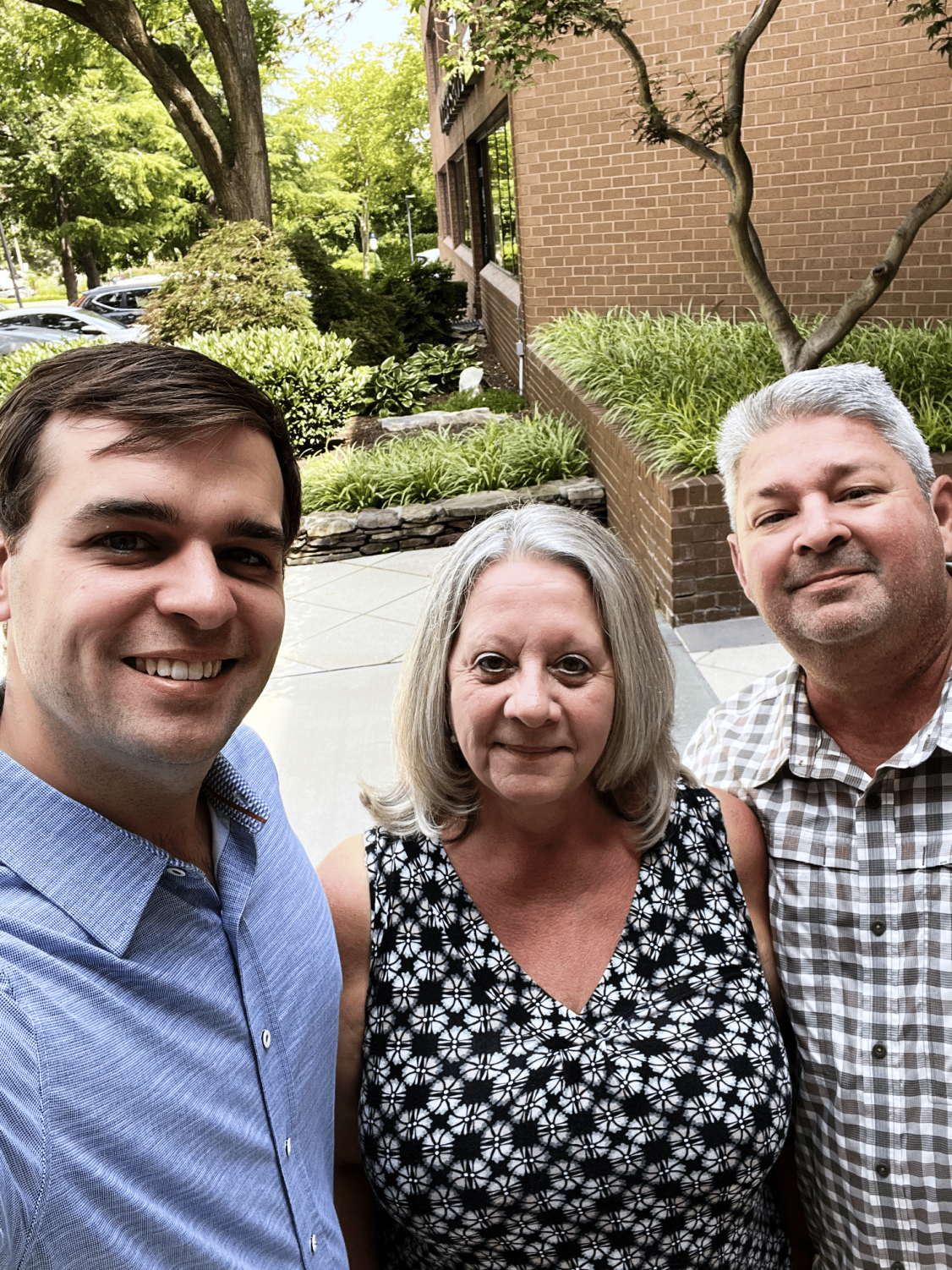
In the summer of 2022, I listed a single-family home in Dale City (Woodbridge) for Susan and Dennis H., both retiring from federal-government careers, Dennis a veteran, as they prepared to relocate to Arizona. Their sale is a textbook version of the retiree timeline this guide describes: prepare the home, price it precisely, and structure the contract so the move stays on schedule.
We listed at $515,000. The home drew four offers and went under contract in four days at $530,000, $15,000 over list, with no seller subsidy and no home-inspection contingency, which meant fewer moving parts between ratification and closing for a couple coordinating a cross-country move.
Susan’s five-star Zillow review afterward: “David is an excellent negotiator with a very personalized touch… extremely communicative and easy to reach to always answer any of our questions. Highly recommended!”
Are you a veteran or military family planning your retirement move? Start with my dedicated guide: Veteran & Military Home Sellers in Northern Virginia: it covers VA-loan advantages when you sell, PCS-style timelines, and how I market the assumable low-rate VA loan many veteran sellers are sitting on.
Case study: an honest off-market comparison for a retiring veteran in Centreville
In 2025 I sat down with Nathan, a military veteran and federal government retiree in Centreville’s Centre Ridge neighborhood, here in Fairfax County, as he planned his retirement move to Florida. We ran both paths with real numbers: what preparing and listing on the open market would likely cost and net him, versus what an off-market cash sale would net after its convenience discount. Seeing the true comparison side by side made the decision easy. For his situation, the off-market cash sale won: no prep work, no showings, and a clean timeline to Florida. I then connected him with a trusted agent in Florida who helped him purchase his next home with the proceeds from his Centreville sale.
The lesson for retiring sellers: the right answer is not always the open market, and it is not always the cash offer. It is the path you choose with complete information. I will show you both, with real costs, and support whichever one serves your retirement.

Selling your home from out of state after you’ve already moved
A meaningful share of retirees sell their NoVA home after they’ve already moved into their destination state, sometimes intentionally, sometimes because of a family-emergency move, sometimes to time the market. David’s workflow is set up for this scenario: secure digital document signing, video walk-throughs of any maintenance issues that arise, vetted local contractors who can address showings-prep, and limited power-of-attorney arrangements where they make sense.
The most important thing to know: the Section 121 capital-gains exclusion has a 3-year clock once you stop using the home as your primary residence. If you’re considering selling-after-moving, talk to David and a tax professional early. For the full out-of-state remote-sale playbook, see Selling Your Northern Virginia Home From Out of State.
County-specific guidance
Each Northern Virginia jurisdiction has its own market dynamics, sub-neighborhood pricing patterns, and disclosure considerations. Pick your county for the dedicated playbook:
Arlington
The highest median sale prices in the region. Long-tenured Arlington homeowners are often sitting on extraordinary appreciation, especially in North Arlington (Donaldson Run, Country Club Hills, Bellevue Forest) and the Clarendon/Courthouse condo corridor. Selling Your Arlington Home to Retire and Relocate.
Alexandria
Old Town historic-district disclosures, Del Ray and Rosemont’s long-tenured single-family inventory, Kingstowne and Cameron Station’s commuter-condo strength: Alexandria’s retiree-seller picture varies sharply by submarket. Selling Your Alexandria Home to Retire and Relocate.
Fairfax County
The largest NoVA jurisdiction with the widest price range: Fairfax City, Fairfax Station, Mantua, Oakton, Burke, Springfield, Centreville, Reston, Herndon, Vienna, McLean, Great Falls, Annandale, Falls Church, and more. David grew up in Burke and graduated from Lake Braddock Secondary School, and has closed transactions across the county. Selling Your Fairfax County Home to Retire and Relocate.
Loudoun County
Newer-construction inventory in Ashburn (Brambleton, Belmont Country Club, One Loudoun, Broadlands, Ashburn Village, Metro Walk at Moorefield), the historic Leesburg market, and Western Loudoun (Purcellville, Lansdowne) each call for different selling strategies. The Silver Line Metro continues to lift Ashburn pricing. Selling Your Loudoun County Home to Retire and Relocate.
Prince William County
Manassas (Bradley Square, Blooms Hill, Lee Square), Woodbridge (Dale City, Markhams Grant, Port Potomac), Dumfries (Country Club Lake), and Gainesville/Haymarket. The Quantico and Fort Belvoir buyer pool keeps demand steady. Selling Your Prince William County Home to Retire and Relocate.
Common mistakes retirees make when selling their NoVA home
Across 12+ years of NoVA transactions, the recurring retiree-relocation mistakes David sees fall into a few clean buckets:
Listing too early without a destination plan. The home sells in 14 days, the destination market is moving slower than expected, and the retiree is suddenly facing a 30-day temporary-housing scramble. The fix: commit to a coordination strategy (sell first / buy first / simultaneous) before the listing goes live.
Letting the Section 121 3-year clock run. The retiree moves to Florida in 2024, leaves the NoVA home empty for 4 years intending to sell “when the market is right,” and loses the $500,000 capital-gains exclusion. The fix: if the move-out date is set, the sale-by date should be set with it.
Over-renovating before listing. Pouring $80,000 into a kitchen update that returns $35,000 of sale-price lift. The fix: get a CMA-driven recommendation on which updates pay back and which don’t.
Pricing based on Zillow Zestimate. Zestimate algorithms struggle with long-tenured homes
“Zestimate algorithms struggle with long-tenured homes that have substantial owner-completed improvements. Twenty-five years of upgrades, a kitchen renovation, two bath remodels, a roof, an HVAC, almost always means the Zestimate is fifty to a hundred fifty thousand dollars low. Pricing based on the Zestimate is leaving real money on the table.”
that have substantial owner-completed improvements. The fix: a real CMA from a local agent. (See: When Your Zillow Zestimate Is Wrong in Northern Virginia.)
Trying to coordinate two transactions without an experienced agent on each end. Closing-date misalignments, inspection-period overlaps, and financing-contingency timing are the three most common ways this goes wrong. The fix: have your NoVA agent and destination-state agent talking directly to each other from day one.
Not establishing residency in the new state on the right tax-year boundary
“If you’re moving to a state with no income tax, align your closing and your move with your tax-year boundary. A December twenty-eighth closing followed by a January fourth move can complicate state residency for the prior year in ways that cost retirees thousands. The tax-year calendar should drive the moving truck schedule, not the other way around.”
. A December 28 closing followed by a January 4 move can complicate state-tax residency for the prior year. The fix: align the closing and the move with your tax-year strategy, in consultation with a CPA.
Staying in Northern Virginia Instead? Local Downsizing Guides
Not every retiree leaves the area. If your next chapter is a smaller home nearby, these guides cover what downsizers in two of our most popular markets need to know:
- Downsizing in Reston, VA: A Selling Guide for Empty Nesters
- Downsizing in McLean, VA: A Selling Guide for Empty Nesters
That’s exactly how it went for one Burke Station Square seller I worked with: her townhouse drew more than five offers, and we closed her sale and her purchase of a one-level home near Fair Oaks on the same day: one move, no stairs, and she stayed close to the community she’d known for decades. You can read the full story (and her son’s five-star review) in my Northern Virginia downsizing guide.
More retirees I have helped sell in Northern Virginia
Nathan’s story above is one of several. A few more, with where each family ended up: see the Florida, North Carolina, and South Carolina, Tennessee, and Arizona playbooks for the destination-specific details.
Mike and Vickie F., Briarwood (Fairfax) to West Virginia, 2025
Mike, who goes by “Chief,” and Vickie sold their Briarwood home in March 2025 and moved to West Virginia. Mike’s review called it “unmatched service” and noted that I have “landed my family and friends into the homes of their dreams.” A relocation sale works best when the seller can focus on the move and trust that the Virginia side is handled completely.
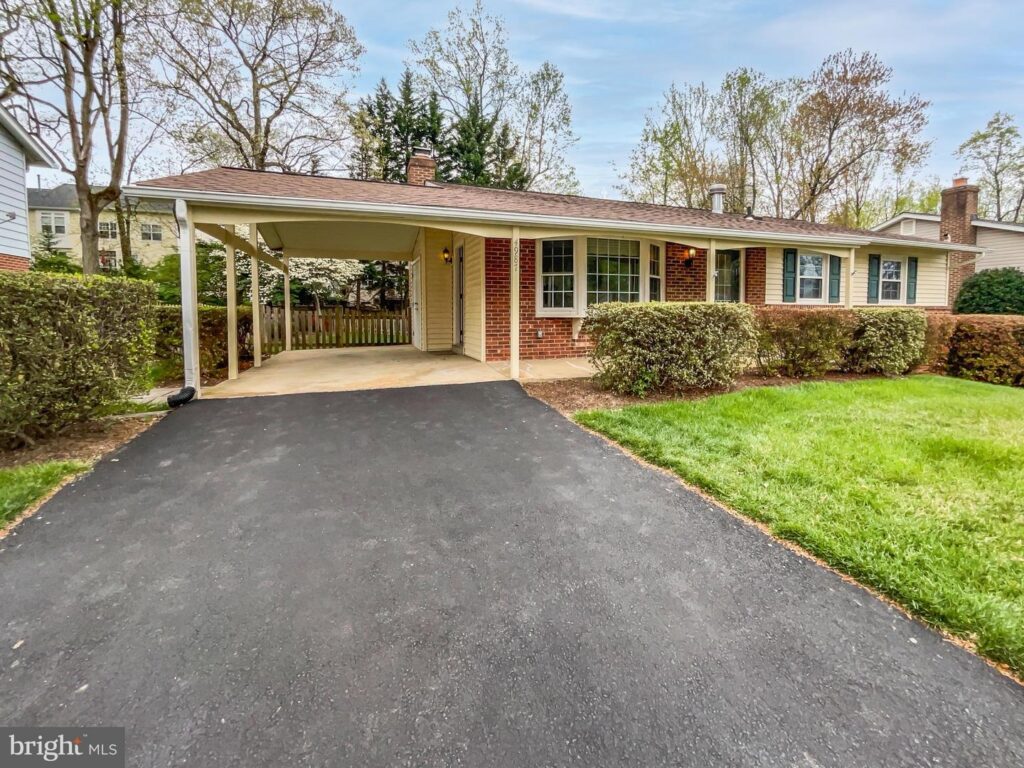
Kay and Chuck D., Ashburn Village (Loudoun County) to Missouri, 2022
Kay and Chuck sold their single-family home in Ashburn Village in 2022 and moved to Missouri. Chuck’s Zillow review: “Having someone of integrity assisting us with this huge effort made the process much less daunting.” That is the whole job on a long-distance retirement move: make the huge effort feel manageable.
Greg L., Dumfries (Prince William County) to Utah
Greg and his family were relocating back home to Utah after a military career and asked me to list their 5-bedroom, 4-bath, 3,000-plus square foot home in the Country Club Lake section of Montclair, Dumfries, in 2026. A social media campaign built around the house’s real secret passageway drew more than 16 million views, the home went under contract after 30 days on market, and it closed at $720,000 with a $25,000 seller subsidy and no inspection repairs. Greg’s review: “completely honest, forthright, and straightforward with us.” Military retirees have usually moved many times; what they want is an agent who tells them the truth about price and timing and then executes.
Tom W., Rosemont (Alexandria City) to Hawaii, 2025
Tom, a retiring military veteran, sold his townhouse in the historic Rosemont neighborhood of Alexandria in early 2025 before moving to Hawaii. In his words, we sold it “quickly at more than the listing price.” Rosemont buyers pay for walkability and history, and pricing to that demand is what produced the over-list result.
About David Mount
David Mount is a REALTOR® with The Redux Group of eXp Realty, specializing in helping Northern Virginia homeowners sell and transition into the next chapter. David grew up in Burke, Virginia and graduated from Lake Braddock Secondary School. With 12+ years of experience, 200+ successful transactions, and 100+ five-star client reviews, David is an NVAR Top Producers Club Platinum Member (2024 and 2025), FastExpert 5-Star Agent, and Zillow Premier Agent. His practice serves retirees, downsizers, inherited-property heirs, military PCS families, and move-up sellers across Fairfax County, Arlington, Loudoun County, Prince William County, Alexandria, and Falls Church.
For retirement-relocation clients specifically, David’s workflow is set up for the remote document signing, dual-state coordination, and decades-of-belongings logistics that this stage of life requires. He maintains a strong network of trusted REALTOR® connections in major retirement destinations across Florida, the Carolinas, Tennessee, and Arizona, and partners with you to interview and select the right destination-state buyer’s agent for your move.
Ready to start planning your retirement move? Call David Mount at (571) 946-8418 or email david.mount@thereduxgroup.com for a confidential consultation.
Frequently asked questions about selling your home to retire in Northern Virginia
When should I start planning to sell my home before retirement?
Most retirees benefit from beginning the conversation 6 to 12 months before their target move date. This gives time to declutter, complete cost-effective updates, model the tax outcome with a CPA, and list at the optimal time. David has also helped retirees move on shorter timelines when needed, including same-month listings for estate-driven situations.
Do I need to make renovations before selling my retirement home?
Not necessarily. David evaluates each home and recommends only updates that meaningfully increase your net proceeds. In most cases, fresh paint, new carpet, updated lighting, and minor landscaping are enough to position a long-tenured Northern Virginia home competitively in the 2026 market. Major kitchen and bath renovations rarely return their cost in this seller’s market.
How do I sell here and buy in another state at the same time?
David coordinates your Northern Virginia sale timeline with your out-of-state purchase using one of three strategies: sell first and rent in your destination state; buy first using a HELOC or bridge loan; or arrange simultaneous closings in both states. The right choice depends on your cash position, your risk tolerance, and how certain you are about your destination home. David partners with your destination-state buyer’s agent on contract terms, contingencies, and closing-date alignment.
Will I owe capital-gains taxes on the sale of my long-time home?
If you’ve lived in your home for at least 2 of the last 5 years, Section 121 of the Internal Revenue Code lets you exclude up to $250,000 of capital gain (single filer) or $500,000 (married filing jointly). For most long-tenured Northern Virginia retirees, this shields all or most of the federal capital-gains tax. Any gain above the exclusion is taxed at long-term capital-gains rates, plus Virginia state tax. Always consult a qualified tax professional for your specific situation.
How long will it take to sell my home in Northern Virginia in 2026?
Across the NVAR region, homes averaged 26 days on market in August 2026, from 24 days in Loudoun to 32 in Arlington, and well-priced homes typically go under contract faster than the average. The total process from listing to closing typically takes 45 to 75 days. David’s pricing strategy is designed to sell efficiently while maximizing your net proceeds.
What if I’ve already moved out of state, can I still sell my Virginia home remotely?
Yes. David’s workflow is set up for remote document signing, video walk-throughs, and limited power-of-attorney arrangements where appropriate. The most important thing to know is the Section 121 3-year clock: you have 3 years from the date you stop using the home as your primary residence to sell it without losing the capital-gains exclusion. If you’ve already moved or are about to, talk to David and a tax professional early. See Selling Your Northern Virginia Home From Out of State.
How much equity should I expect from a Northern Virginia home I’ve owned 20+ years?
Long-tenured NoVA homes have appreciated substantially since 2000, especially in inner-Beltway jurisdictions (Arlington, Alexandria, McLean, Vienna) and Silver Line adjacent Loudoun. Original purchase price plus capital improvements plus 2026 market appreciation defines your gross equity. After Section 121 capital-gains exclusion, most of that gain is yours. For worked examples by county and price band, see Selling a Northern Virginia Home You’ve Owned 20+ Years.
Should I sell before or after I retire?
This is partly a tax question, partly a logistics question, and partly an emotional one. The tax answer depends on your income trajectory and your destination state’s tax regime. The logistics answer depends on whether you have the bandwidth to manage decluttering and showings while still working. The emotional answer is yours alone. David and your CPA can help you model the tradeoffs side by side.
What’s the difference between selling to relocate and selling to downsize locally?
Downsizing locally, moving to a single-level home, condo, or active-adult community within Northern Virginia, has different tax, logistics, and timing characteristics than selling to relocate out of state. If you’re still deciding between the two paths, see Downsizing in Northern Virginia: A Guide for Empty Nesters. David serves both segments and is happy to work through the comparison with you.
How do I handle 30 years of accumulated belongings?
You don’t have to do it alone. David maintains a network of vetted senior move managers, professional organizers, and estate-sale companies who specialize in helping retirees through this process. Introductions are made without referral fees. For tradeoffs between estate sale, consignment, and donation, see Senior Move Management for Northern Virginia Retirees.
Are there real-estate tax advantages to selling in Virginia vs. waiting until I’m a Florida (or other) resident?
For most retirees, the Section 121 federal capital-gains exclusion is the dominant tax factor regardless of which state you’re a resident of at sale. Virginia does tax the portion of gain that exceeds the federal exclusion. If you’re moving to a no-state-income-tax state (Florida, Tennessee), there can be planning value in aligning the sale and the residency change with tax-year boundaries. Always work with a CPA on this.
What if my spouse and I disagree about the timing or destination of the move?
This is more common than people think. David’s role is to give you both clear data: current valuation, projected net proceeds after Section 121, market conditions, destination-state pricing, so the conversation can be grounded in numbers rather than impressions. The decision is yours; David’s job is to make sure you both have the same picture of the financial and logistical landscape.
Do you work with retirees in Arlington, Alexandria, Fairfax County, Loudoun, or Prince William?
Yes, all five priority Northern Virginia jurisdictions, plus Falls Church, McLean/Vienna, and Reston/Herndon. Each county has a dedicated retiree-relocator playbook (linked in the County-specific guidance section above) so you can drill into the specific market dynamics that apply to your home.
Related seller resources
- Selling Your Arlington Home to Retire and Relocate
- Selling Your Alexandria Home to Retire and Relocate
- Selling Your Fairfax County Home to Retire and Relocate
- Selling Your Loudoun County Home to Retire and Relocate
- Selling Your Prince William County Home to Retire and Relocate
- Moving from Northern Virginia to Florida in Retirement
- Moving from Northern Virginia to North Carolina in Retirement
- Moving from Northern Virginia to South Carolina, Tennessee, or Arizona
- Capital Gains Tax When Selling a Long-Held Northern Virginia Home: Section 121 Explained
- How to Coordinate Selling Your Northern Virginia Home and Buying in Another State
- Selling a Northern Virginia Home You’ve Owned 20+ Years
- Senior Move Management for Northern Virginia Retirees
- Selling Your Northern Virginia Home From Out of State
- Selling Your Home in Fairfax County: 2026 Guide
- How to Sell Your Home in Alexandria, VA: 2026 Seller’s Guide
- Arlington Home Sellers Guide 2026
- Loudoun County Seller’s Guide 2026
- Prince William County Seller’s Guide 2026
- Downsizing in Northern Virginia: Empty Nester Guide
- Selling an Inherited Home in Northern Virginia
- Military PCS & Relocation Sellers
- Veteran & Military Home Sellers in Northern Virginia
What David’s Retiring & Relocating Sellers Say
Real 5-star reviews from Northern Virginia homeowners David has helped sell and move on to their next chapter.
“My wife and I are extremely happy with the service provided by our realtor, David Mount, from The Redux Group. He exceeded expectations in helping us sell our townhouse located in the historic Rosemont neighborhood in Alexandria, VA quickly at more than the listing price. We highly recommend David!”
Thomas W. · retiring homeowners who sold their townhouse in historic Rosemont, Alexandria, VA, quickly and above list price · 5-star Google review
Selling in a specific Northern Virginia county?
Planning a retirement move out of a specific Northern Virginia county? See David’s data-backed 2026 county seller guides, including selling your home in Loudoun County and selling your home in Prince William County.