


Quick answer: Virginia does not require a septic inspection to sell a home, but since July 1, 2025 (House Bill 2671) any septic inspection that is done as a condition of a sale must meet a state minimum standard, performed by a qualified inspector under a written agreement, so the old “pump it and glance at it” inspection no longer counts. Fairfax County separately requires septic tanks to be pumped every five years. VA and FHA buyers must have the well water tested. The sellers who get the best price in Fairfax Station, Clifton, Great Falls, Oakton, and western Loudoun pull their county septic records, pump and inspect before listing, and price with the system’s age in mind. I’m David Mount, a REALTOR with The Redux Group of eXp Realty. Both of my Fairfax Station listings were on septic, including a $1.3 million colonial that went under contract in nine days; I also represented the buyer of a $1.1 million septic-system home in Pohick Station, Fairfax Station, and have sold septic-system homes in Middleburg, Warrenton, and Spotsylvania County. Call or text me at 571-946-8418 and tell me the neighborhood and the age of the system.
Last reviewed and updated: October 22, 2026
Which Northern Virginia neighborhoods are on septic and well
Public sewer stops at the edge of the suburban core. The large-lot neighborhoods buyers pay a premium for are the ones on private systems: most of Fairfax Station and Clifton, much of Great Falls, parts of Oakton, Vienna’s outer edges, and nearly all of western Loudoun (Middleburg, Purcellville, Round Hill, the older lots in Aldie, and Leesburg’s outskirts) and western Prince William (Nokesville, parts of Haymarket). If your lot is an acre or more in Fairfax County, assume septic until the county says otherwise.
What the 2025 Virginia septic inspection law changed (and did not)
Both of my Fairfax Station listings, the $1.3 million Glenverdant colonial and the Fairfax Station Road home, were on septic, and both went under contract inside ten days. The process below is the one I used on each.
House Bill 2671, effective July 1, 2025, did not make septic inspections mandatory at sale. What it did was set a minimum standard for any inspection that is requested by a lender, agent, or buyer as a condition of the sale. The inspector must meet state licensing, credentialing, or experience requirements; there must be a written inspection agreement; and the inspection must cover the system’s accessible components rather than just the tank. In practice this means two things for a seller:
- The inspection the buyer orders will be more thorough than it was before 2025, so problems that used to slide through now surface. Better to find them yourself first.
- An old inspection report, or a pump-out receipt, is not an inspection. If you want to hand the buyer something that satisfies the new standard, order a current inspection from a qualified inspector.
The Virginia Department of Health does not require anything at sale. The Residential Property Disclosure Statement tells the buyer it is their responsibility to learn about the septic system and its maintenance. If your system is operating under a repair waiver, a separate disclosure is required under Va. Code § 32.1-164.1:1.
Fairfax County’s own rules
- Five-year pump-out. Fairfax County’s Chesapeake Bay Preservation Ordinance requires conventional septic tanks to be pumped out at least once every five years. Buyers’ inspectors ask for the receipt. If you cannot find one, pump before listing; it is also the first step of any inspection.
- Records. The Fairfax County Health Department holds the original permit, the as-built drawing, and any repair history for your system. Request them before listing. A drawing that shows where the drainfield is, and that there is reserve area, answers the buyer’s biggest question.
- Alternative systems (AOSS). If your home has an alternative onsite sewage system (common on newer large-lot builds and on lots with poor soil), state regulation requires an operating permit, a maintenance contract, and periodic inspections by a licensed operator. Buyers’ lenders will ask for the current permit and the last inspection report. Missing paperwork here is the most common septic-related closing delay in Fairfax Station and Clifton.
Private wells: what buyers and lenders will test
A VA loan requires a water quality test on a private well, and FHA loans generally do too; conventional lenders often follow suit. The test checks bacteria (coliform and E. coli) and nitrates at minimum, sometimes lead and other contaminants. A failed test is usually fixable with a shock chlorination and retest, but it takes a week you may not have before closing. Test the well yourself when you list. Buyers also ask about yield (gallons per minute), the age of the pump and pressure tank, and whether the well is the required distance from the drainfield. The county permit tells you the last one.
How septic and well affect price in 2026
They mostly do not, in the neighborhoods where buyers expect them. A Fairfax Station buyer at $1.3 million knows the house is on septic. What moves price is uncertainty: no records, no recent inspection, an alternative system with lapsed permits, or a drainfield near the end of its life. A conventional drainfield in Fairfax County typically lasts 25 to 40 years. If yours is older than 30, get the inspection before listing and price with the answer in hand, because the buyer’s inspector will find out either way, and a surprise at inspection costs more than a known condition at listing.
Selling in Fairfax Station, Clifton, Great Falls, Oakton, or western Loudoun?
Call or text me at 571-946-8418. I will tell you which records to pull, whether to inspect before listing, and what the house is worth.
12+ years, $130M+ sold, 100+ five-star reviews. NVAR Platinum Top Producer.
7510 Willowbrook Rd, Fairfax Station, on septic: listed and sold for $1,300,000 in nine days, 2023.
Septic-system homes I have sold
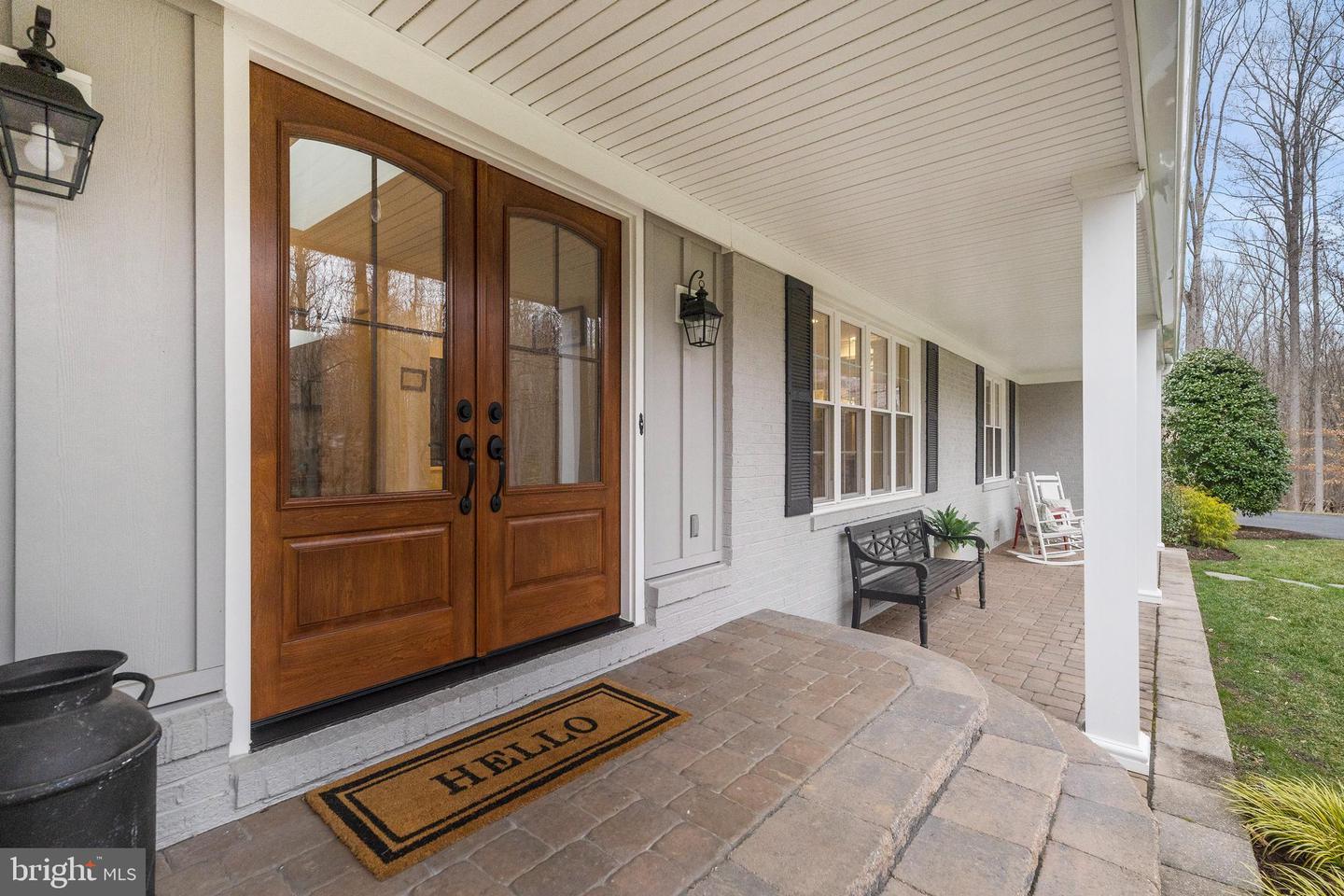
- Glenverdant, Fairfax Station, 2023 (septic). 7510 Willowbrook Rd, a luxury colonial listed and sold at $1,300,000 with a contract in nine days. The full case study is on the luxury seller page.
- Fairfax Station Road, Fairfax Station, 2021 (septic). Sold at $760,000 with a contract in seven days.
- Homestead Farm Lane, Middleburg, 2021 (septic). A western Loudoun sale for an investor client, under contract in four days at $455,000.
- Waverly, Warrenton (Fauquier County), 2020 (septic). 7269 Waverly Dr, listed and sold at $437,500 in December 2020.
- Spotsylvania County (septic). Sold off market, outside my usual service area, included here because it shows how a septic home can be sold privately without the inspection becoming a negotiation.
- Pohick Station, Fairfax Station, 2021 (septic). Represented the buyer of a $1,100,000 home on septic. Buyer side is where I see the inspection from the other chair: what the buyer’s inspector flags, what lenders ask for, and what a seller should have had ready.
Have a large-lot home to sell? Call or text me at 571-946-8418.
Six septic-system sales above, three of them in Fairfax Station. Tell me the neighborhood and I will know the comps.
Frequently asked questions about selling a home with septic or well
Is a septic inspection required to sell a house in Virginia?
No. Virginia does not require one. But under House Bill 2671, effective July 1, 2025, any septic inspection done as a condition of a sale must meet a state minimum standard, performed by a qualified inspector under a written agreement. Most buyers and lenders request one, so plan on it.
Does Fairfax County require the septic tank to be pumped before selling?
Not specifically at sale, but Fairfax County requires conventional septic tanks to be pumped at least every five years. Buyers’ inspectors ask for the receipt, and pumping is the first step of any inspection, so pump before listing if you are near or past five years.
Do I have to disclose my septic system when selling in Virginia?
The state disclosure statement tells the buyer it is their responsibility to learn about the septic system. A separate written disclosure is required if the system is operating under a repair waiver (Va. Code § 32.1-164.1:1). You may never hide a known failure.
Does a VA loan require a well water test in Virginia?
Yes. VA requires a water quality test on a private well, and FHA generally does as well. The test covers bacteria and nitrates at minimum. Test your own well when you list so a failed result does not delay closing.
What is an AOSS and what do I need to sell a house that has one?
An alternative onsite sewage system, used where soils will not support a conventional drainfield. Virginia requires an operating permit, a maintenance contract, and periodic licensed inspections. Have the current permit, the contract, and the last inspection report ready; missing AOSS paperwork is the most common septic-related closing delay in Fairfax Station and Clifton.
Does a septic system lower my home’s value in Fairfax County?
Not in neighborhoods where buyers expect it. What lowers value is uncertainty: no records, no recent inspection, a lapsed AOSS permit, or an old drainfield. Pull the county records and inspect before listing.
Where do I get my septic records in Fairfax County?
From the Fairfax County Health Department, which holds the original permit, the as-built drawing, and repair history. Loudoun County’s Health Department does the same for Loudoun properties.
Have you sold homes on septic in Fairfax County?
Yes. Both of my Fairfax Station listings were on septic: a $1.3 million Glenverdant colonial that went under contract in nine days in 2023, and a Fairfax Station Road home that went under contract in seven days in 2021. I also represented the buyer of a $1.1 million Pohick Station home on septic in 2021, and I have sold septic-system homes in Middleburg (western Loudoun, four days, 2021) and Warrenton (Fauquier County, 2020), and an off-market septic home in Spotsylvania County.
Still have questions? Call or text me at 571-946-8418.
Or leave your name and number in the form just below and I will text you back.
I read every message myself and reply by call or text.
David Mount, REALTOR, CPRES, MRP
The Redux Group of eXp Realty
NVAR Platinum Top Producer
Sources
- Virginia REALTORS, New septic system inspection legislation coming July 1 (HB 2671)
- Virginia Department of Health, What you should know when buying a house with an onsite system
- Va. Code § 32.1-164.1:1, Septic system repair waivers and disclosure
- Va. Code § 55.1-703, Required disclosures for buyer to beware
- Fairfax County Health Department, Septic systems (pump-out requirement and records)
- NVAR, A REALTOR’s guide to well and septic, part one